Admissions Open: 2026 Batch

Kerala PSC Staff Nurse DHS
Exam Coaching

The definitive preparatory program for the Kerala PSC Staff Nurse DHS exam. Master Kerala-state nursing subjects, sharpen your DHS recruitment skills, and secure your place in Kerala's Department of Health Services.

✦ What's Included

Complete Learning System

Enrolling Now
500+ Hours Classes
10,000+ MCQs
150+ CBT Tests

Live + Recorded Classes

500+ Hours

Free PPT Notes

All Subjects

Practice Questions

10,000+ MCQs

Model Exams

150+ CBT Tests

Expert Mentor Support

1-on-1 Guidance

Revision Sessions

Structured Review

Unlimited Tests

Until You Crack It

Animated Classes

Highly Engaging

Kerala PSC Staff Nurse DHS Snapshot.

Conducted By
Kerala Public Service Commission (Kerala PSC) – Kerala State Government
Name of Examination
Kerala PSC Staff Nurse DHS Recruitment Exam
Course / Post
Staff Nurse DHS / Senior Staff Nurse DHS
Admission Type
Recruitment through Kerala PSC notification and DHS selection stages
Eligibility Qualification
GNM Nursing or B.Sc Nursing/ Post Basic B.Sc Nursing from a recognized institution; Registered Nurse & Midwife (RNRM) with Kerala Nursing Council
Registration Requirement
Valid Kerala Nursing Council Registration (RNRM)
Duration / Job Type
Regular DHS staff nurse appointment as per Kerala PSC notification
Mode of Application
Online application through the official Kerala PSC portal
Selection Process
Written Exam / CBT → Document Verification → Medical Fitness → Appointment
Participating Institutions
Kerala DHS hospitals, community health centers, and Kerala PSC healthcare units
Official Website

Understanding Kerala PSC DHS.

What is Kerala PSC Staff Nurse DHS?

The Kerala PSC Staff Nurse DHS Exam is a state-level recruitment examination conducted by the Kerala Public Service Commission to select qualified nurses for the Department of Health Services, Kerala. It is the essential pathway for nurses aiming to join Kerala DHS hospitals, community health centers, and state healthcare institutions.

State Government RecruitmentConducted by Kerala PSC
Kerala DHS PostingStaff Nurse role in state health services
Regular State ServiceGovernment hospital nursing positions
Secure Career PathState pension, allowances, and benefits
Career GrowthPromotion opportunities in Kerala DHS
Attractive SalaryKerala DHS pay scales and allowances

Eligibility & Age Requirements.

Check Your Eligibility.

Official Exam Syllabus.

Anatomy & Physiology
  • Anatomical terms and orientation
  • Circulatory System — structure & function of heart and blood vessels
  • Lymphatic System — lymph vessels, lymph circulation, spleen and thymus
  • Respiratory System — organs, normal respiration and deviations
  • Digestive System — structure and function of alimentary tract
  • Excretory System — kidneys, urine formation, fluid and electrolyte balance
  • Endocrine System — thyroid, parathyroid, pituitary, adrenal gland and pancreas
  • Reproductive System — male and female organs, breast and reproductive health
  • Nervous System — brain, cranial nerves, spinal cord, motor/sensory pathways, autonomic NS
  • Sense Organs — skin, eye, ear, nose and tongue; physiology of vision, hearing, smell, touch, taste and equilibrium
  • Skeletal & Muscular System — bones, tendons, ligaments, cartilages, axial and appendicular skeleton, muscle structure
Microbiology
  • History of bacteriology and microbiology
  • Types of microorganisms and normal flora of body
  • Pathogenesis and common diseases
  • Culture and isolation of microbes
  • Sources and types of infection
  • Factors affecting growth of microbes
  • Cycle of transmission of infection
  • Reaction of body to infection and mechanism of resistance
  • Collection of specimen
Psychology
  • Concept, scope and significance of psychology for nurses
  • Structure of mind — conscious, preconscious, id, ego and super ego
  • Psychology of human behaviour, basic needs, dynamics, motivation and mental health
  • Mental mechanisms — uses and importance
  • Attitudes — meaning, development, changes and effects on behaviour; importance of positive attitude
  • Habits — meaning, formation, breaking bad habits and importance of good habit formation
  • Learning — nature, types, laws and factors affecting learning; memory and forgetting
  • Thinking and reasoning — types, problem solving and creative thinking
  • Observation and perception — attention, laws, factors and errors in perception
  • Personality development, assessment and characteristics of age groups
  • Nature and measurement of intelligence; individual differences
Sociology
  • Nature, scope and significance of sociology in nursing
  • Socialisation process and influence of environment on individual development
  • Rights and responsibilities of individual in society
  • Family — concept, types, functions, problems and interdependence
  • Marriage — types and medico-social aspects
  • Society — social groups, structures, group behaviour and morale
  • Social change, social control, social stratification and social problems
  • Social agencies and remedial measures
  • Culture and characteristics of community — rural and urban
Core Nursing Concepts
  • Concept, scope, ethics and principles of nursing; history of nursing in India
  • Holistic approach, determinants of health and effects of illness
  • Therapeutic environment — physical, psychological and aesthetic factors; prevention of environmental hazards
  • Patient's adjustment to hospital — personal, socio-economic and cultural background
  • Admission, transfer and discharge procedures
  • Basic nursing skills — communication, interview, recording and reporting
  • Nursing process — assessment, diagnosis, planning, implementation and evaluation
  • Meeting basic needs — physical, hygienic, elimination, nutritional, psychological and spiritual
  • Diversional and recreational therapy; care of terminally ill and dying patient
  • Assessment of patient — physical, physiological and psychological
Infection Control & Waste Management
  • Nature and types of infection, chain of infection transmission
  • Medical and surgical asepsis, isolation precautions, barrier nursing
  • Hand washing, personal protective equipment — types, techniques of wearing and removing
  • Transportation of infected patient
  • Biomedical waste management — types, hazards, decontamination, segregation and disposal
Clinical Pharmacology
  • Principles, routes, effects and storage of medications
  • Medication errors and broad classification of drugs
  • Systems of drug measurements, dosage calculations, terminologies and abbreviations
  • Oral and parenteral therapies
  • Advanced techniques — epidural, intrathecal, intraosseous, intraperitoneal, intrapleural, intraarterial
  • Topical administration, inhalations; recording and reporting of medications
  • Therapeutic nursing care — respiratory problems, altered temperature, fluid/electrolyte imbalance, pain
  • Care of unconscious and bed-ridden patients
First Aid
  • Importance, principles, procedures and CPR
  • First aid in emergencies — asphyxia, drowning, shock, wounds and bleeding
  • Injuries to bones, joints and muscles — fractures, sprains, strains and falls
  • Burns, scalds and poisoning — ingestion, inhalation, bites and stings
  • Foreign body in eye, ear, nose and throat
  • Community emergencies — fire, explosions, floods, earthquakes; role of nurse in disaster management
  • Community resources — Police, Ambulance, Voluntary agencies (local, state, national, international)
Community Health Nursing
  • Concept of health and disease, primary health care, promotion and maintenance of health
  • Philosophy, goals, objectives and principles of community health nursing
  • Qualities and functions of community health nurse and steps of nursing process
  • Health system in India, health care delivery system and health planning
  • National health and family welfare programmes; major health problems in India
  • Specialized community health services and nurse's role
  • Concept and function of health team; role of nursing personnel at various levels
  • Health information system; health agencies — international and national
  • Health assessment — infant, preschool, school, adolescent, adult, antenatal, postnatal and elderly
  • Principles of epidemiology, levels of prevention, disease transmission, immunization and control of infectious disease
  • Family health services — goals, home visits, bag technique, referral system
  • Records and reports — types, preparation and maintenance
  • Management of minor ailments
Nutrition
  • Classification of foods, normal dietary requirements and balanced diet
  • Diseases and disorders caused by nutrient imbalance
  • Food intolerance and inborn errors of metabolism
  • Methods of food preparation, preservation and storage
  • Therapeutic diet — modifications for medical and surgical conditions
  • Special diets — low sodium, fat free, iron rich, low/high protein, high caloric, geriatric, diabetic, bland, high fibre, liquid, semi-solid and soft diet
  • Nutritional programmes and problems in India
Medical & Surgical Nursing
  • Pathophysiological mechanism of disease, altered immune response and autoimmune diseases
  • Fluid electrolyte imbalance, operation room technique
  • Preoperative, intraoperative and postoperative management
  • Patients with respiratory, GI, metabolic/endocrinal, renal, neurological and connective tissue disorders
  • Nursing management of elderly
  • Prevention, screening and early detection of cancer; warning signs
  • Oncological conditions — epidemiology, staging, treatment modalities (immunotherapy, radiotherapy, stem cell therapy, gene therapy)
  • Oncological emergencies, psychosocial aspects, rehabilitation and palliative care
  • Burns, breast disorders and integumentary disorders
  • Plastic and reconstructive surgery — skin grafts, flaps, complications, pre/postoperative care
  • Ophthalmic conditions — national programmes, ocular emergencies, eye banking
  • ENT disorders, cardiovascular, haematological and communicable diseases
  • STDs and musculoskeletal disorders
  • Emergency nursing — triage, airway obstruction, haemorrhage, shock; trauma and poisoning
  • Environmental emergencies — heat stroke, drowning, hanging; disaster nursing
Mental Health Nursing
  • Concept of mental health and illness; principles of psychiatric nursing
  • History and trends of psychiatric nursing; national mental health programme
  • Mental health assessment — history taking, MSE, interview technique
  • Therapeutic nurse-patient relationship — components, phases and significance
  • Communication skills and factors influencing communication
  • Psychopathophysiology of human behaviour and classification of mental disorders
  • Disorders of thought, motor activity, perception, mood, speech, memory, concentration and judgement
  • Management of patients with various mental disorders
  • Personality types related to psychiatric disorders
  • Substance use; child and adolescent psychiatric disorders; sleep, eating and sexual disorders
  • Bio-psychosocial therapies and role of nurse
  • Preventive mental health services across childhood, adolescence, adulthood and old age
  • Psychiatric emergencies and crisis intervention — overactive, underactive, violent behaviour, suicide, withdrawal
  • Forensic psychiatry and legal aspects
Child Health Nursing
  • Concept of child health care, trends and emerging challenges
  • Preventive paediatrics and vital statistics
  • Growth and development
  • Role of nurse in caring for a sick child; paediatric procedures
  • Behavioural disorders, communicable diseases and child abuse
  • Protein energy malnutrition, bites, stings, pica and tics
  • Health problems — accidents, obesity and juvenile delinquency
  • Congenital disorders management
  • Disorders of renal, respiratory, GI, CVS, haematological, neurological and endocrine systems
  • Management of handicapped children — mental retardation, dyslexia, vision and hearing impairment
  • Fluid electrolyte imbalance and burns
  • Problems of locomotion — osteomyelitis, poliomyelitis, kyphosis, lordosis, scoliosis, fractures
  • Pre and postoperative care; child welfare services and ethical/legal aspects
Midwifery & Gynaecological Nursing
  • Scope and trends in midwifery; vital statistics related to maternal health
  • Stages of embryological and fetal development
  • Normal pregnancy — preconception care, genetic counselling, physiological changes, antenatal care, minor disorders
  • Stages of labour and role of midwife in caring for a woman in labour
  • Management of normal newborn and normal puerperium
  • Complications during pregnancy, risk pregnancy and high-risk labour
  • Complications of third stage and puerperal complications
  • Assessment and management of high-risk and sick newborn; neonatal ICU levels of care
  • Obstetric emergencies and post abortion care
  • Drugs in obstetrics, teratogens; ethical and legal issues in midwifery
  • Gynaecological history taking, examination and investigation
  • Physiology, psychology and pathology of puberty; fertility and infertility
  • Pelvic infections, gynaecological disorders and breast disorders
  • Menopause — physiological changes, HRT, health education and surgical menopause
Nursing Education & Research
  • Concept of education and teaching-learning process
  • Methods of teaching
  • Significance of research in nursing
  • Research process — purposes, objectives and steps
  • Research approach and design — types, methods, advantages and disadvantages
  • Data collection — methods and instruments
  • Data analysis — compilation, tabulation, classification, summarization, presentation and interpretation
  • Descriptive statistics — scales of measurement, frequency distribution, mean, median, mode and standard deviation
  • Utilization of research in nursing practice
Professional Trends & Administration
  • Nursing as a profession; role of professional nurse
  • Professional ethics and etiquettes for employment
  • Personal and professional development — career nursing, continuing and in-service education
  • Legislation in nursing and professional organizations
  • Philosophy and principles of administration
  • Management process — POSDCORB
  • Policies of hospital and various departments
  • Administration of different health care units; legal responsibilities; leadership styles
  • Management of supplies and equipment
  • Cost and financing of health care services in India
  • National health plans; role of state and central government in fund allocation
  • Health insurance

How To Prepare.

Exam Process.

Step 1 of 7
01
Application
02
Fee Payment
03
Doc Upload
04
CBT Exam
05
Merit List
06
Verification
07
Appointment
01

Online Application Submission

Candidates must apply online through the official Kerala PSC portal during the notified application period, filling in personal, academic, and professional details accurately as per the advertisement.

02

Application Fee Payment

Pay the application fee online according to the post or category (UR/OBC/EWS/SC/ST/Ex-Servicemen). Payment is required to complete the registration process as per Kerala PSC guidelines.

03

Application Status & Document Upload

After successful registration, candidates can check application status and upload scanned photographs, signature, and other required documents as per Kerala PSC guidelines and post requirements.

04

Entrance Examination (CBT / Written Test)

Eligible candidates appear for the Computer-Based Test (CBT) or written examination on the scheduled date. The exam assesses subject knowledge relevant to nursing including medical-surgical nursing, community health, maternal-child nursing, and general skills.

05

Shortlisting for Merit List / Score Publication

Based on exam performance, candidates are shortlisted for counselling or appointment. Scores and merit lists are published on the official Kerala PSC website for candidates to verify their selection status.

06

Document Verification & Medical Examination

Shortlisted candidates must produce original documents for verification and may undergo a medical fitness check if required. Educational certificates, nursing registration, and category documents are thoroughly verified.

07

Final Merit List & Appointment

The final merit list is prepared based on exam scores, document verification, and medical fitness. Selected candidates are appointed as Staff Nurses in Kerala DHS hospitals and health institutions according to merit, reservation norms, and available vacancies.

Why Choose Eduooz Academy.

Why Choose Eduooz Academy for Kerala PSC Staff Nurse DHS Exam Coaching?

Why Students Love Eduooz

Live + Recorded Classes

500+ hours of expert-led live interactive sessions with lifetime access to recorded lectures for unlimited revision.

Free PPT Notes

Comprehensive visual study materials and PPT presentations covering all Kerala PSC Staff Nurse DHS subjects for quick and effective learning.

Practice Questions

10,000+ topic-wise MCQs with detailed explanations to strengthen your conceptual understanding and exam readiness.

Model Exams

150+ CBT-simulated full-length mock tests that mirror the actual Kerala PSC Staff Nurse DHS exam pattern and difficulty level.

Expert Mentor Support

1-on-1 personalized guidance from Kerala PSC DHS experts and subject specialists to optimize your preparation strategy.

Periodic Revision Sessions

Structured revision sessions before every exam cycle ensuring maximum retention and recall of key concepts.

Unlimited Test Series

Access to all test series without limits until you crack the exam. Practice anytime, anywhere on any device.

Highly Engaging Animated Classes

Complex medical concepts explained through 3D animations and visual storytelling for deeper understanding.

500+ Hours Live & Recorded Learning
150+ CBT Tests
1-on-1 Guidance

Previous Year Question Papers.

Select a paper to preview

Select a paper to preview

Choose a paper from the list to preview it here

Paper Unavailable

Enroll to access and download this paper.

Download the Paper

No papers found for this year

Free Practice Tests.

Question 1 of 25 Test 1

Q1.

Test 1 Completed!

Mock Test Completed!

Section-wise Score

Analytics

Section Performance

Overall Accuracy

Question Review

Study Materials.

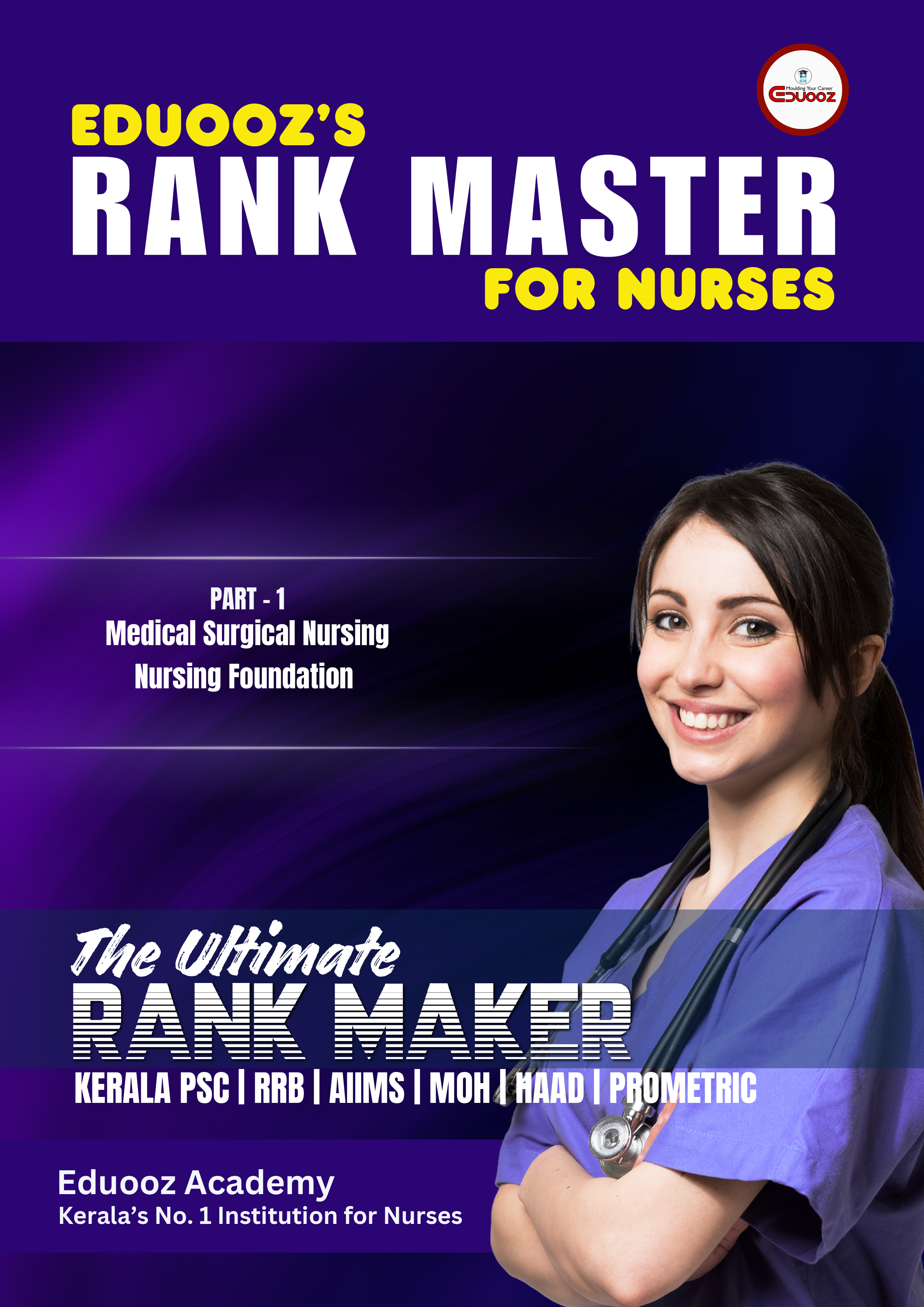
Nursing Rank Master Part 1 front cover
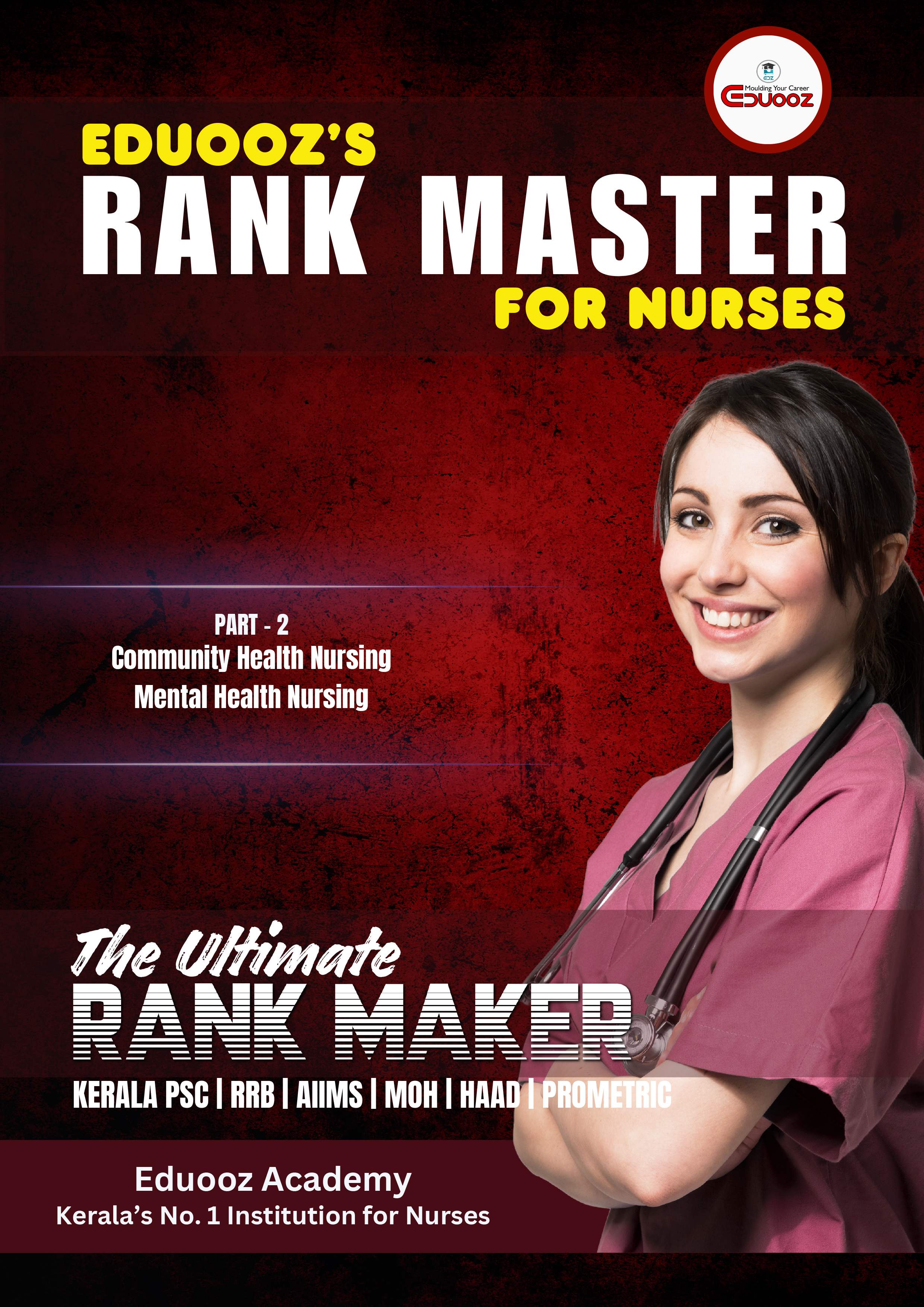
Nursing Rank Master Part 2 front cover
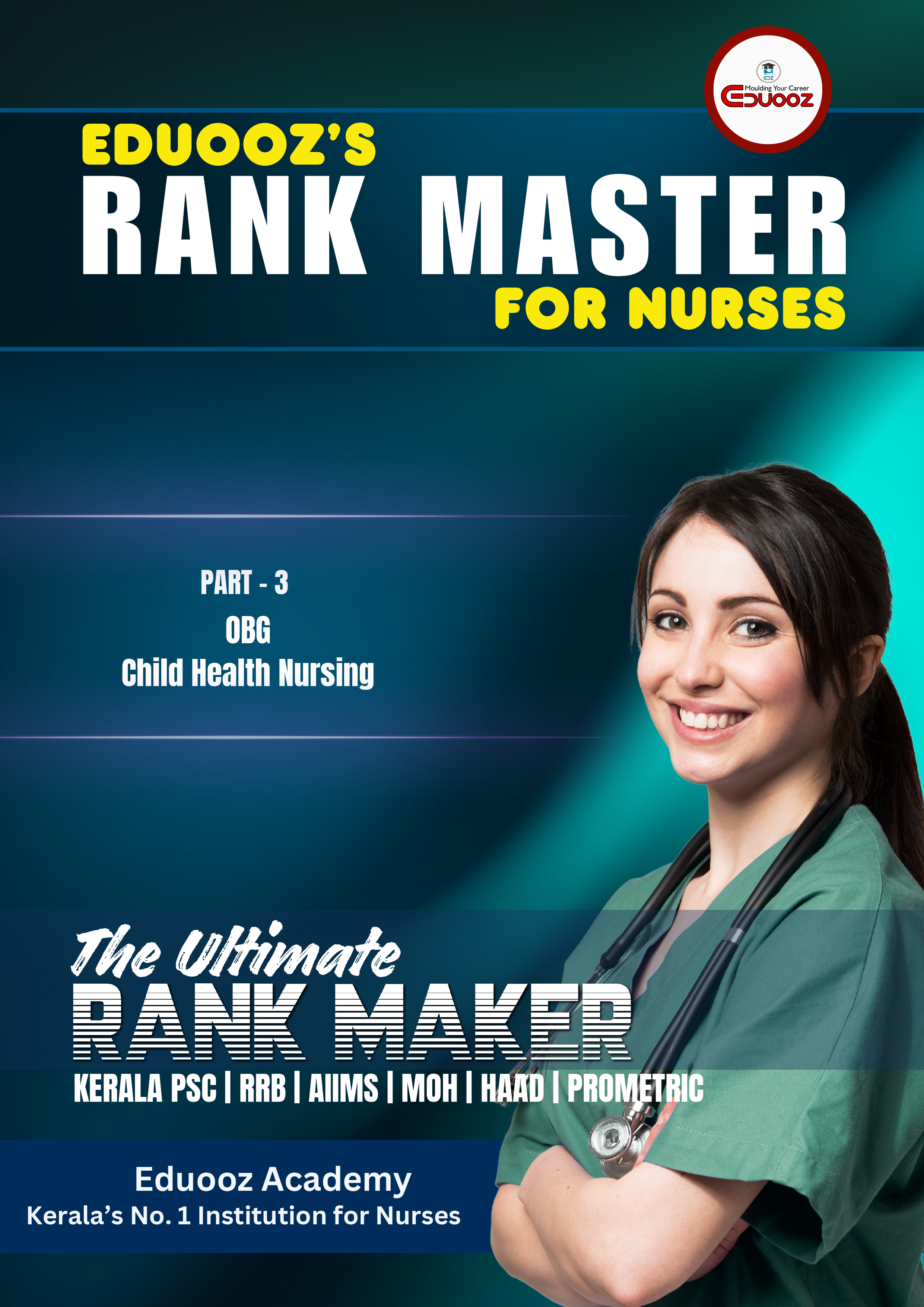
Nursing Rank Master Part 3 front cover
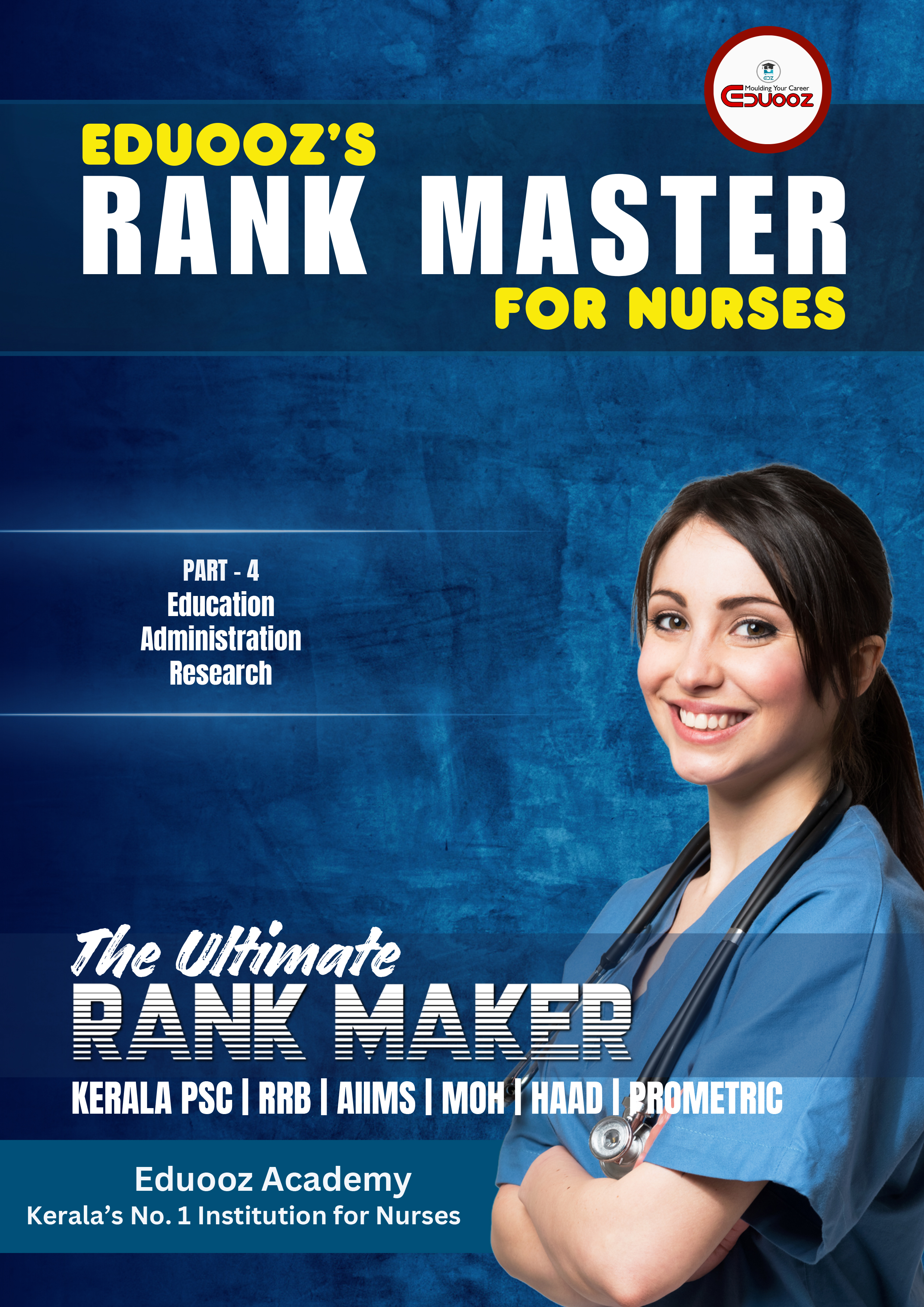
Nursing Rank Master Part 4 front cover

Learn from the Experts Behind
Thousands of Kerala PSC Success Stories.

Guidance from experienced educators, subject specialists, rank holders, and exam strategists who understand exactly what it takes to crack the Kerala PSC Staff Nurse DHS exam.


Eduooz Faculty Eduooz Faculty

Hear It From The Nurses
Who Cracked Their Exam.

Super notes for Assistant Professor in Nursing

Super notes for Assistant Professor in Nursing

Latest Upload · 2025
"Watch our latest nursing upload on our YouTube channel. More testimonial videos will be added soon."

01
DHS Staff Nurse Exam Preparation 2025

DHS Staff Nurse Exam Preparation 2025

Exam Guide · 2025
"Exam Guide · 2025"
02
Mission NORCET 11 | Eduooz Academy

Mission NORCET 11 | Eduooz Academy

NORCET · 2025
"NORCET · 2025"
03

Trusted by Thousands of Nurses.

4.9

Google Rating

0+ Google Reviews
0+ Students Enrolled
0+ Selections Made
0% Pass Rate
Trusted by 5000+ Nursing Aspirants
Kerala PSC DHS Focused Training
Structured CBT Preparation
Dedicated Mentor Support
Previous Year Paper Analysis
Mock Exam Platform
9:41
Mock Test Completed! Score: 178/200 · Rank Top 5%
Eduooz Home Dashboard
Course Listing
Mock Test Interface
Performance Analytics
Practice & Study Materials
Leaderboard

Download the Eduooz App.

Access live classes, mock tests, study materials, and performance analytics anywhere, anytime. The complete Kerala PSC Staff Nurse DHS preparation ecosystem — always in your pocket.

0%
Pass Rate
0%
Satisfaction
0%
App Uptime
0%
Accuracy Gain
Live & Recorded Classes
500+ hours with interactive Q&A sessions
CBT Mock Tests
150+ full-length tests mirroring actual Kerala PSC DHS exam
Performance Tracking
Real-time analytics, rank tracking & insights
Offline Study Materials
Download notes, PPTs & videos for offline use

Related Resources.

Clarity & Transparency

Everything you need to know.

From Kerala PSC eligibility to exam preparation strategies, find answers to your most pressing questions about the Staff Nurse DHS exam.

The Kerala PSC Staff Nurse DHS Exam is a competitive recruitment examination conducted by the Kerala Public Service Commission (Kerala PSC) for the recruitment of staff nurse positions in various Kerala DHS hospitals, health departments, and healthcare institutions under the Government of Kerala.

Candidates possessing B.Sc Nursing, Post Basic B.Sc Nursing, GNM Nursing, or equivalent nursing qualifications along with valid Nursing Council registration are generally eligible to apply for Kerala PSC Staff Nurse DHS recruitment.

The educational qualification for Kerala PSC Staff Nurse DHS vacancies generally includes B.Sc Nursing, Post Basic B.Sc Nursing, or Diploma in General Nursing and Midwifery (GNM) from a recognized institution with valid registration.

The Kerala PSC Staff Nurse DHS selection process generally includes a Computer-Based Test (CBT), merit-based shortlisting, document verification, and medical fitness verification.

The Kerala PSC Staff Nurse DHS Exam Pattern typically consists of objective-type multiple-choice questions covering nursing subjects, general awareness, reasoning ability, numerical aptitude, and language proficiency.

Applicants generally need educational certificates, Nursing Council registration certificate, identity proof, age proof, category certificate (if applicable), passport-size photographs, signature, and other supporting documents.

Kerala PSC Staff Nurse DHS nurses provide patient care, administer medications, assist doctors, monitor patient conditions, maintain medical records, supervise nursing activities, and ensure quality healthcare services.

Kerala PSC Staff Nurse DHS jobs offer government job security, attractive salary packages, healthcare benefits, paid leave, pension-related benefits, promotion opportunities, and long-term career stability.

Nursing Officers can advance to Senior Nursing Officer, Nursing Superintendent, Assistant Nursing Superintendent, Deputy Nursing Superintendent, and various nursing administration roles.

Kerala PSC Staff Nurse DHS jobs offer stable government employment, competitive salaries, excellent benefits, career advancement opportunities, and the chance to work in reputed Kerala DHS hospitals and healthcare institutions.

Limited Intake

Your Government Nursing
Career Starts Here.

Admission to our Kerala PSC Staff Nurse DHS preparation tracks is curated to ensure maximum personalized mentorship. Secure your seat before the next batch closes.

Call Us Anytime

+91 8111850054

Email Us

admissions@eduooz.online

Your information is 256-bit encrypted and strictly confidential.